Select a work to read it.

Queering the Hero-Villain Dynamic in The LEGO Batman Movie

Essay · 2025 · UTCP Heroes, NUS

The LEGO Batman movie (2017) directed by Chris McKay portrays Batman as a lonely, self-absorbed version of the character, in constant conflict with The Joker, who seeks emotional acknowledgement from Batman. The two characters are shown to be locked in a relationship that closely resembles romantic entanglement. Batman has always been surrounded by queer speculation (Medhurst, 2013). In the 60s, the television show was very campy, shown through bright costumes and colours, paired with humorous and melodramatic writing (Medhurst, 2013). However, recent adaptations, especially Nolan's, have presented Batman as darker, more masculine, and generally more "serious." There is a lack of discourse on the changing interpretations of the character and what it means for the traditionally defined hero-villain tropes (Lendrum, 2005). Flipping the recent narrative, it is relevant to explore how the film's queer-coded, romantic-comedy framing of Batman and Joker reassigns "hero" and "villain" roles, and what this reveals about changing cultural definitions of heroism. Through Sedgwick's (1985) homosocial framework, I will perform close textual analysis of 3 defining scenes that highlight their nuanced relationship and its implications.

This paper draws on Eve Sedgwick's theory of male homosocial desire in examining how the film queers the traditional hero-villain rivalry through parodic and emotionally intimate scenes. Sedgwick (1985) defines male homosocial relations as a spectrum, expressing emotional and power-based bonds between men ranging from friendship and rivalry to erotic attachment. She argues that sustenance of the patriarchal structure depends on these self-affirming male bonds, while 'policing' them through homophobia, setting arbitrary boundaries between camaraderie and taboo homosexual desire. Friendship functions as an outlet for male emotions, rivalry as an outlet for emotional intensity, and erotic attachment as a representation of the repressed desire between men (Sedgwick, 1985). She suggests that this desire is narrative, just as much as it is social. It has shaped stories, producing male characters that suppress vulnerability and project a paternal hierarchy. In many cultural texts, any form of male intimacy is portrayed in the context of aggression or rivalry, remaining culturally 'permissible'. In superhero narratives such as ours, this 'policing' is enacted through routine combat, where emotional intensity is displaced into violence; allowing male intimacy to be felt but never openly acknowledged. Through this lens, Batman and Joker's relationship can be understood as a queer-coded romance in which Batman's rejection of all emotional commitment reinforces their roles as hero and villain. Tracing how film and textual features visualise Sedgwick's continuum between rivalry and desire, this essay strives to reveal how this film redefines heroism as emotional intelligence and vulnerability by manipulating the hero-villain dynamic.

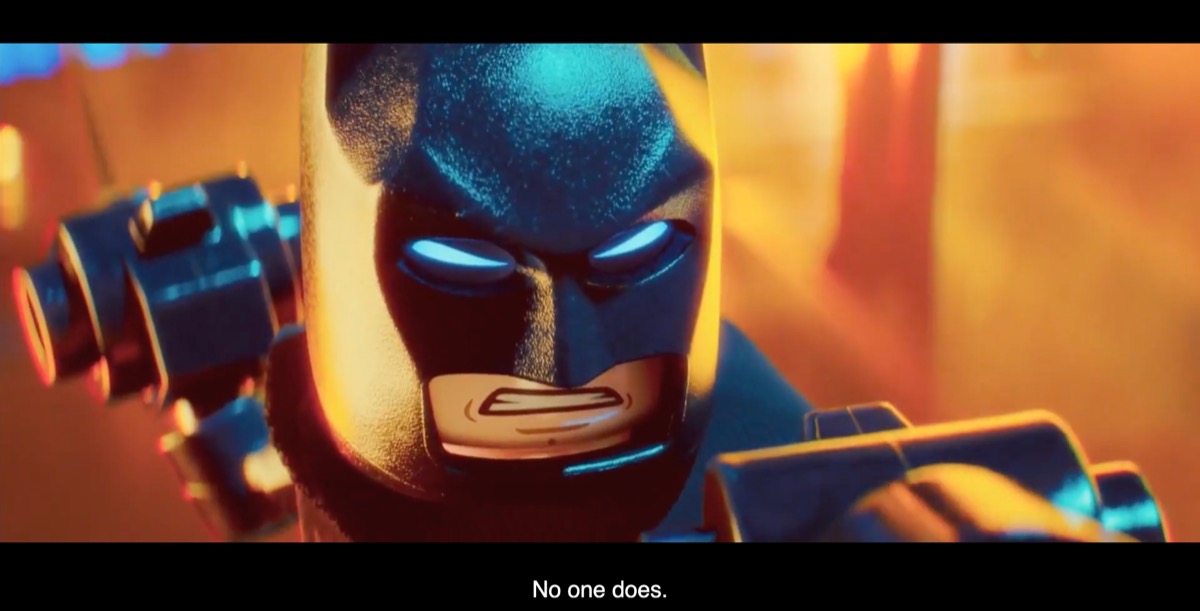
The film manifests the romantically parodic relationship through the queering of typical hero-villain scenes. The first instance of this is the confrontation scene during the setup of this movie (10:15 – 12:00), where Joker tries to blow up Gotham and Batman stops him. It does so by transforming the expected hero-villain confrontation into an emotional rejection. Tearing up, Joker insists that Batman is his "greatest enemy", while Batman dismissively states, "There is no 'us'... I don't need you…You mean nothing to me." This dialogue echoes the defensive tone of a lover's evasion of commitment. This is reinforced visually, through tight shots seen in Figures 1 and 3 that isolate both characters, magnifying their emotional vulnerability (Rooney and Bálint, 2018), and mimicking the intimacy of a rom-com confession. The physical framing of the characters, with Batman's complete control of Joker's movement and position using his grappling hook in Figure 2, parallels the emotional dominance Batman has over Joker, denying him of any real connection. Joker's bowed head casts him as submissive and sad, while Batman's raised head posture does the opposite, framing him as the emotionally dominant figure (Mignault and Chaudhuri, 2003). This reinforces the romantic parody being created between the two. Furthermore, the moonlit skyline casts a sentimental glow, as seen in Figure 1, over what would traditionally be an action standoff. The neon hues and saturation boosted colour palettes offer an antithetical interpretation to Nolan's films, turning brooding masculinity into melodramatic comedy. Within Sedgwick's (1985) framework, these stylised choices materialise the blurring between homosocial rivalry and homoerotic tension. Batman's refusal of Joker's emotional vulnerability is a defence of his classic heteronormative masculinity, illustrating Sedgwick's argument on 'policing' homosocial relationships. The rivalry between them, masquerading as desire, lets us visualise Sedgwick's homosocial continuum, exposing how the performance of heroic detachment relies on denying homosocial intimacy.
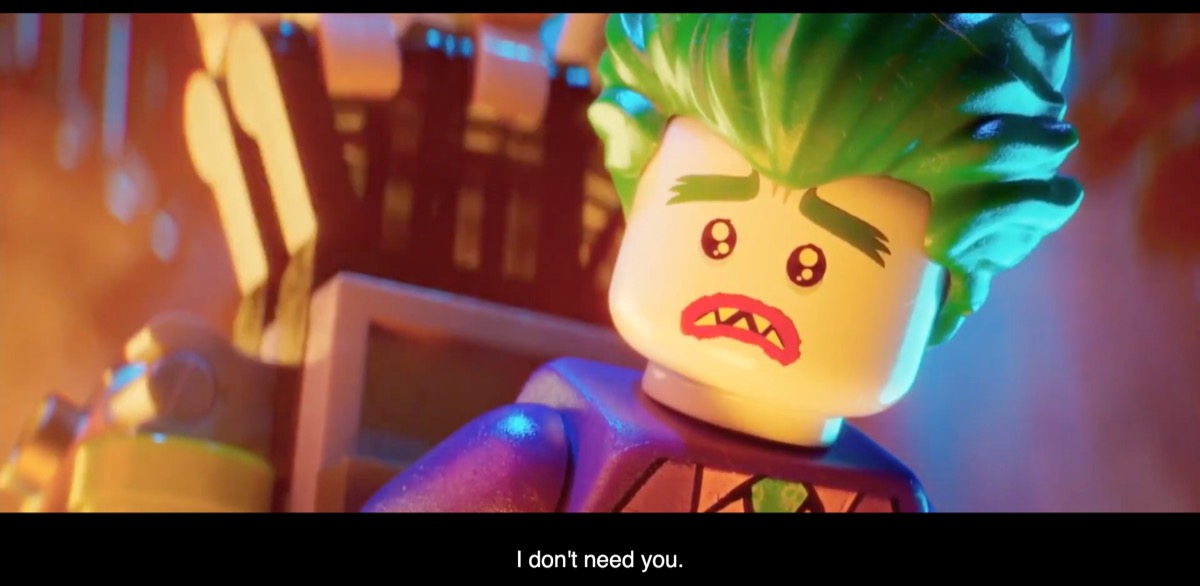
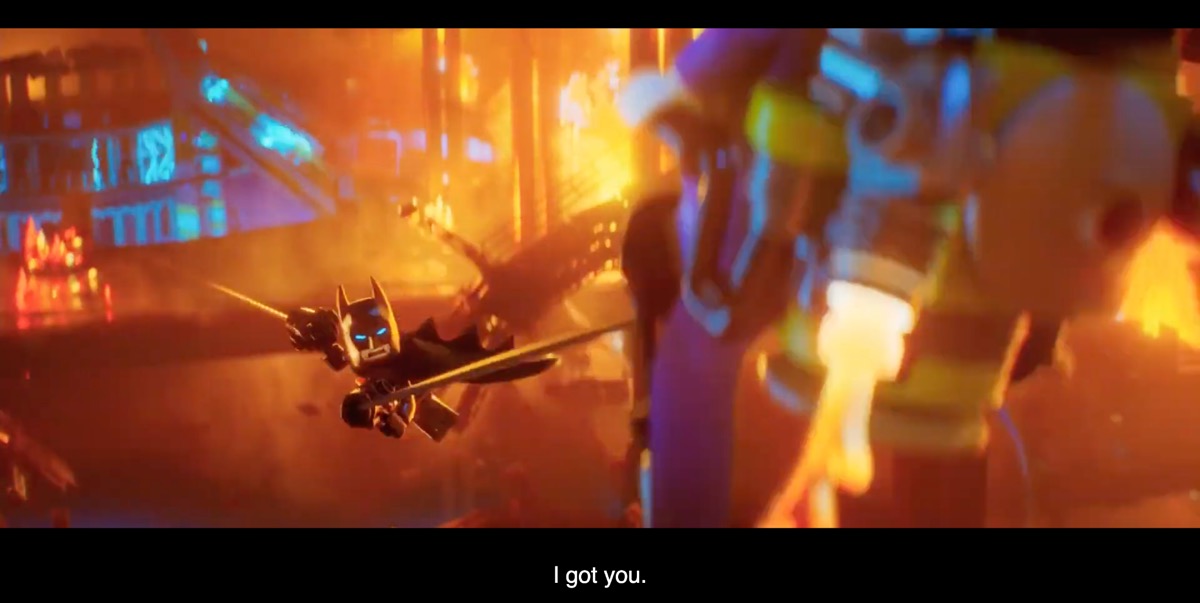
Figure 1 – 'Break-up' scene shot 1 (11:45)
Figure 1 — 'Break-up' scene shot 1 (11:45)
Figure 2 – 'Break-up' scene shot 2 (10:30)
Figure 2 — 'Break-up' scene shot 2 (10:30)
Figure 3 – 'Break-up' scene shot 3 (11:30)
Figure 3 — 'Break-up' scene shot 3 (11:30)

In Figure 4, Alfred confronts Batman about his 'greatest fear', which is being part of a family again. This scene highlights the film's critique of repressed masculinity and emotional avoidance. Set within the Batcave, this sequence juxtaposes emotional intimacy against architectural greatness; towering ceilings and empty rooms intensify Batman's detachment from emotionally meaningful relationships. When urged to confront his loneliness, Batman's response, "I don't have any (emotions)… I don't feel anything emotionally except for rage, 24/7, 365, at a million percent" is delivered so dramatically that it elicits the irony in the statement. His emotionless face paired with his physical theatrics serves as a comedic caricature of stoic masculinity (Rooney and Bálint, 2018), once again criticising conventional ideals of masculine heroes. Conversely, Alfred's face is warmly lit, moving calmly towards Batman and symbolically approaching his guarded emotional bubble. His willingness to care signals the strength in emotional courage instead of repression. The visual dynamic contrast between the two characters is representative of Sedgwick's (1985) continuum between homosocial care and repressed desire: Alfred's strong paternal affection trespasses into an intimacy that disrupts Batman's self-image as the invulnerable and stoic hero. The film transforms a quiet exchange of words into an expression of vulnerability, shedding light on how the basis of Batman's heroic persona is rooted in his avoidance of intimacy. Within the framework, the scene reveals his persona as a front for his vulnerability, rendering his masculinity as hollow rather than heroic (Sedgwick, 1985). Alfred's insistence on emotional connection displays a robust expression of masculine strength, building on acceptance rather than avoidance. Through this stark contrast, the film frames emotional honesty as the true meaning of masculine heroism.


Figure 4 – 'Alfred's Confrontation' scene shot 1 (20:30)
Figure 4 — 'Alfred's Confrontation' scene shot 1 (20:30)
Figure 5 – 'Alfred's Confrontation' scene shot 2 (19:41)
Figure 5 — 'Alfred's Confrontation' scene shot 2 (19:41)
Figure 6 – 'Alfred's Confrontation' scene shot 3 (19:14)
Figure 6 — 'Alfred's Confrontation' scene shot 3 (19:14)

The film's ending scene, where Batman and Joker decide to work together to save Gotham, is a direct emotional reversal of the first 'break-up' scene, functioning as a 'confession' scene. Batman admits to the Joker in Figure 7, "You're the reason I get up at 4:00 in the afternoon and pump iron until my chest is positively sick" transforming macho self-discipline into an absurd declaration of affection for Joker. His exaggerated monologue peppered with cheesy romantic lines, mimics the structure of a confession of love while maintaining the use of hostile language. The framing tightens to a two-shot, their faces occupying symmetrical halves of the screen as Batman says, "If you help me save Gotham, you'll help me save us." The shared pronoun marks the first sign of Batman's emotional vulnerability, dismantling the rivalry of hero and villain into co-dependence. The soft orange backlight bathes the pair in warmth and the physical positioning of the characters in Figure 7 parodies typical emotional crescendos of romantic films. When their exchange escalates into "I hate you…I hate you forever," the repetition of hate functions as dramatic irony, echoing Sedgwick's point that patriarchal culture disguises desire as antagonism, preserving masculine power (Sedgwick, 1985). Batman's "I hate you" becomes the film's love confession, queering heroism into emotional interdependence through irony. The scene's balance of parody and sincerity fully embodies Sedgwick's continuum, showing that in confronting intimacy rather than rejecting it, Batman finally becomes a hero capable of feeling.

Figure 7 – 'Confession' scene shot 1 (1:31:31)
Figure 7 — 'Confession' scene shot 1 (1:31:31)

The film draws on various filmmaking techniques and narrative devices in portraying Batman and Joker's emotional journey. Tight shots, visual contrasts, and colour gradings are used to draw out nuances in both characters' journeys. Furthering the romantic parody, narrative devices and dialogue are utilised in achieving the satirical tone that represents their antagonistic relationship. The 'break-up scene' serves as a catalyst for their emotional rivalry, mirroring romantic conflict. The 'confrontation' scene further develops this idea by reinforcing Batman's emotional isolation as a negative demonstration of his masculinity, while providing a masculine ideal in Alfred's emotionally mature behaviour. Finally, the 'confession' scene resolves Batman and Joker's tension through a parodic romantic declaration. These scenes collectively trace Batman's gradual movement along Sedgwick's homosocial continuum, from denial and repression to recognition and care (Sedgwick, 1985). The results of the analysis show that The LEGO Batman movie queers the superhero myth, not through rejection, but through redefinition. In defining heroism as emotional vulnerability, the movie proposes a new model of heroism grounded in emotional intimacy and acceptance.

Lendrum, R. (2005). Queering Super-Manhood: Superhero Masculinity, Camp and Public Relations as a Textual Framework. International Journal of Comic Art, 7(1), 287–303.

McKay, C. (Director). (2017, February 9). The LEGO Batman Movie. Warner Bros. Pictures.

Medhurst, A. (2013). Batman, Deviance and Camp. University Press of Mississippi EBooks, 237–250. https://doi.org/10.14325/mississippi/9781617038068.003.0020

Mignault, A., & Chaudhuri, A. (2003). The Many Faces of a Neutral Face: Head Tilt and Perception of Dominance and Emotion. Journal of Nonverbal Behaviour, 27(2), 111–132. https://doi.org/10.1023/a:1023914509763

Rooney, B., & Bálint, K. E. (2018). Watching More Closely: Shot Scale Affects Film Viewers' Theory of Mind Tendency But Not Ability. Frontiers in Psychology, 8. https://doi.org/10.3389/fpsyg.2017.02349

Sedgwick, E. K. (1985). Chapter 5. In Between Men: English Literature and Male Homosocial Desire. New York Columbia University Press.

Lifting the Veil: A Critique of Rawls' Justice

Essay · 2025 · PE2101, NUS

John Rawls' A Theory of Justice (1971) is one of the most influential works of political philosophy produced in the 20th century. The central idea in his theory addresses how rational agents in a society should agree upon the principles of justice without these principles being affected by preconceived self-serving notions of one's standing in society. To achieve this, Rawls introduces two interconnected devices: the original position, a hypothetical thought experiment, and the veil of ignorance, the mechanism by which impartiality within that position is secured. This essay examines whether the veil of ignorance succeeds in its role of producing a fair and impartial original position that ultimately justifies Rawls' two principles of justice.

The analysis proceeds in three stages. First, the background concepts: the original position, the veil of ignorance, and Rawls' two principles of justice will be introduced. Second, the essay evaluates the veil as a rational choice framework, considering both its strengths and weaknesses. Importantly, these vulnerabilities will be organised into two distinct tiers: internal critiques that accept the framework's rational choice foundations but show that it fails on its own terms, and an external critique that challenges the coherence of the framework's underlying model of agency altogether. This structure reveals that the veil faces problems from both inside and outside the rational choice framework, revealing a deeper problem with grounding justice through procedural rationality.

Rawls describes his theory as 'justice as fairness', a concept introduced to replace utilitarian views that were insufficiently protecting individuals' rights. His primary concern is with how social institutions assign rights, duties, and the advantages of cooperation. A just society, on his account, is one whose governing principles would be freely accepted by rational agents if they were choosing under conditions of genuine equality.

The original position is Rawls' thought experiment, devised as a way of determining the principles of justice free agents would choose if they were choosing fairly. It is a purely hypothetical situation in which agents deliberate about principles of justice behind what Rawls calls the veil of ignorance. Behind the veil, agents are denied knowledge of their place in society, their class, their natural assets, their conception of the good, and their psychological dispositions. They retain, however, general knowledge of economics, political theory, and the basic facts of human psychology. By selectively stripping away self-interested knowledge while preserving capacity for rational deliberation, Rawls aims to generate principles that are genuinely impartial.

The two principles that Rawls claims agents would unanimously select are: the equal liberty principle, according to which each person is entitled to the most extensive basic liberties compatible with similar liberties for others; and second, the difference principle, which permits social and economic inequalities given that they benefit the least advantaged members of society and are attached to positions open to all, given fair equality of opportunity. The first principle always takes priority over the second, meaning that basic liberties cannot be traded away for economic gains. Rawls argues that rational agents behind the veil, uncertain about their own position, would prefer these principles over a utilitarian alternative.

Strengths of the Veil of Ignorance

The veil of ignorance draws its structure from rational choice theory (RCT). Agents behind the veil resemble the idealised rational actor: they are mutually disinterested, seek to maximise their utility, and deliberate under conditions of uncertainty. Combining general knowledge with the absence of self-knowledge, Rawls reframes the selection of justice principles as a rational decision problem, lending his theory a degree of formal rigour.

One notable strength of this design is the veil's exclusion of morally arbitrary factors. Rawls holds that natural talents, background, and class are undeserved and therefore morally irrelevant to the distribution of social benefits. The veil makes it impossible for agents to select principles that support advantages arising from such arbitrary endowments. This promotes impartiality and provides a rational mechanism for ensuring that justice should be blind to morally irrelevant differences.

A further strength is the veil's capacity to undermine utilitarianism. Because agents do not know whether they will occupy the most or least advantaged position in society, they have a strong rational incentive to protect the worst-off. No rational agent behind the veil would endorse sacrificing the interests of a minority if they might be among that minority. This provides a structural basis for Rawls' difference principle that does not rely on contestable moral intuitions alone.

Limitations of the Veil of Ignorance

Internal Critiques

The most significant internal challenge to the veil concerns the ambiguity of rational choice under uncertainty. Rawls assumes that agents behind the veil will adopt the maximin rule, selecting the option that maximises the minimum possible outcome. However, the assumption is not well-grounded in the formal structure of the original position. Rawls justifies maximin by appealing to the stakes: because the principles chosen will govern fundamental rights and life prospects, agents are not willing to gamble. Yet this is an external argument about risk aversion rather than a necessary consequence of the framework itself.

Harsanyi (1975) presses this point by arguing that rational agents behind the veil would instead assign equal probability to all societal positions and maximise expected utility. This procedure, unlike maximin, follows from the axioms of rational choice. This leads not to Rawls' difference principle but to utilitarianism. Note that Harsanyi's argument is itself conducted within the rational choice framework; it does not reject the veil's design. Rather, it demonstrates that the framework is indeterminate: it does not uniquely support Rawls' principles over a utilitarian alternative. The problem is not that the veil relies on rational choice theory, but that rational choice theory alone is insufficient to settle the question of which principles agents would select.

A second internal limitation is raised by Susan Okin (1989), who argues that despite its alleged impartiality, the veil produces systematically biased results. Rawls' two principles overwhelmingly reflect political and economic concerns, and ignore matters of family life and domestic justice, concerns that bear disproportionately on women and are more central to non-western societies. Even after stripping away differences, the veil prioritises an androcentric and economic-centric tradition into the original position. This is an internal critique in that it accepts the veil's aspiration to impartiality but shows that the rational agent it models is not representative of all perspectives.

External Critique

The most fundamental challenge to the veil comes from a rejection of its underlying model of the self. Michael Sandel (1982) argues that by stripping agents of their social attachments and personal identities, the veil does not produce a more rational agent but dissolves the agent altogether. To Sandel, agency is bound to the social and moral context that it exists in. The values and experiences that the veil removes are the very conditions that make moral reasoning possible. If Sandel's critique is correct, its implications reach further than those of the internal critiques. It renders the entire enterprise of seeking an impartial standpoint through the removal of identity incoherent. The internal critiques assume that the goal of impartiality is coherent and dispute whether the veil achieves it. Sandel's external critique challenges the goal itself: if moral reasoning is constitutive of social identities, then stripping them away does not yield impartiality but unintelligibility. Principles derived from such an agent cannot claim authority over real persons whose agency is constituted by the values the veil erases.

Taken together, the three critiques reveal a compound problem. The internal critiques show that even if the veil were plausible, its products are underdetermined and culturally skewed. The external critique shows that the model itself is implausible. Rawls' framework thus faces challenges at both levels. It neither uniquely supports his principles nor rests on a sound conception of the self.

Conclusion

The veil is an innovative mechanism that succeeds in capturing an important moral intuition: that principles of justice should not be chosen in ways that favour the already advantaged. By excluding morally arbitrary knowledge, it offers a procedure for translating impartiality into decision-making, and provides a basis for resisting utilitarian arguments.

However, the veil's limitations are significant and, taken together, point to a deeper structural problem. Internally, rational choice theory proves indeterminate: Harsanyi shows that maximin is not the uniquely rational response to the veil's conditions, and Okin reveals that the veil's supposedly neutral agent results in a biased perspective. Externally, Sandel questions whether a model in which all identity has been removed can ground principles of justice.

These difficulties do not completely undermine the veil. It illuminates what an impartial procedure for selecting justice principles may look like and provides a useful framework for critiquing principles that advantage the already privileged. As a foundation for Rawls' claims that his two principles would be unanimously and rationally chosen, the veil is insufficient. The veil is a powerful starting point for considering justice, but not conclusive proof of any particular conception of it.

Harsanyi, J. C. (1975). Can the maximin principle serve as a basis for morality? A critique of John Rawls' theory. American Political Science Review, 69(2), 594–606.

Okin, S. M. (1989). Justice, gender, and the family. Basic Books.

Rawls, J. (1971). A theory of justice. Harvard University Press.

Sandel, M. (1982). Liberalism and the limits of justice. Cambridge University Press.

Keeping it Real: Hick's Pluralism

Essay · 2025 · Philosophy of Religion, NUS

When contemplating religious beliefs, an important idea to consider is the treatment of other religions as compared to one's own. Rowe posits three possible responses to religious diversity, namely exclusivism, inclusivism and pluralism. This paper will examine pluralist beliefs as presented by John Hick. Hick's theory aims, ambitiously, to provide a viewpoint to the issue of many religions. The stance this paper takes is that it is an unsound theory due to its reliance on inadequate premises.

Pluralism, as presented by Hick, stems from the observation that many religions appear to genuinely produce moral and spiritual transformations within their followers and cause a shift from self-centeredness to "divine-centeredness" (Rowe, 2007). He believes that it would be inconsistent to treat one's religion as uniquely valid when other religions produce similar results. He also dismisses exclusivism and inclusivism as arbitrary dogmatic stances that do not adequately address the breadth of religious experiences. In their place, he proposes a reality, one so divine and all-consuming, "the Real in itself", that is only experienced through the medium of different religions and their gods. It follows that Allah, Krishna, Shiva, etc. are simply manifestations of this Real. Therefore, he argues that all major religions are equally valid representations of the Real.

The premise that introduces the Real is refutable. Hick is adamant that the Real cannot be described using language or any human concepts, and can only be experienced. He claims that the Real "cannot be said to be one or many, person or thing, conscious or unconscious, purposive or non-purposive" (Rowe, 2007). This concept is adopted from Kant's idea that we can only know things as a constitution of our experience. Similarly, he puts forward that we can only encounter the Real through religious frameworks and experiences, and not directly. This raises a glaring logical fallacy against his argument. Purposive or non-purposive are not contrary properties such as good or evil, but are contradictory properties in the sense that every thing must be one or the other. To claim that the Real is neither of these "risks having his theory of religious pluralism rejected on the grounds that it is simply incoherent" (Rowe, 2007). Scholars at the University of Glasgow support this refutation and note that by assigning neither contradictory property to the Real, Hick "appear(s) to render incoherent his own fundamental assertion" (Mackay, 2016). If the Real in itself cannot coherently be in our reality, then Hick's argument for pluralism collapses as it is primarily built upon the assumption that the Real exists.

For the sake of argument, suppose the Real does exist in our reality. This still presents us with a fundamental problem with its properties and function. Hick introduces the Real as an explanation to different religions' common transformative experiences. However, with no describable properties of its own, it is unclear how the Real would serve as the catalyst for experiences that are inherently characterised by purpose and goodness. If the Real is ineffable, then how could it possibly be the explanation for any religion's shared experiences. Furthermore, its lack of distinguishable qualities lead to the question as to how it would distinguish between good and evil, a salient point in most religious experiences. The concept of the Real as Hick introduces it is not sufficiently explanatory of his argument.

Further pushing against Hick's concept of pluralism is an objection introduced by Gavin D'Costa; the notion that pluralism is in actuality, exclusivism repackaged (D'Costa, 1996). He argues that a true pluralist must have some form of criterion for distinguishing between actual religious experiences that originate from the Real, and inauthentic ones such as cults or fictitious political religions such as Nazism. He then goes on to say that as soon as a pluralist applies these criteria on any religious experiences, by definition, they become an exclusivist in the sense that they are assigning different levels of significance to different religions. Hick's initial criticism against exclusivism was its arbitrariness, and D'Costa shows how these critiques may be applied to pluralism as well. Hick's pluralism simply moves the distinguishing line of real religious experiences from inauthentic ones, from one religion looking outward, to major religions looking outward. This weakens his argument for pluralism as it likens it to exclusivism, a stance he himself disputed.

Hick's theory of plurality aims to address the concern that it is arbitrary to treat one's own religion as uniquely valid, when other religions produce the same results. However, the concept of the Real that he posits in order to develop pluralism renders the argument unsound and inadequately explanatory of the many religions. Looking further than the internal inconsistencies, D'Costa shows how pluralism produces the same problem that it aimed to solve in the first place; the problem of exclusivism's arbitrariness. A true pluralist would be required to provide a more coherent conception of the Real in order to make the argument sound, which Hick does not provide.

D'Costa, G. (1996). The Impossibility of a Pluralist View of Religions. Religious Studies, 32(2), 223–232. https://doi.org/10.1017/s0034412500024240

Mackay, M. J. N. (2016). A critical study of John Hick's religious pluralism. In Gla.ac.uk. https://theses.gla.ac.uk/7659/1/2016mackaymth.pdf

Rowe, W. L. (2007). Philosophy of religion: an introduction. Belmont, CA: Wadsworth.

Bebop or Be Governed: Collective Authority and the Birth of Jazz Democracy

Essay · 2025

Paste the full text of this piece here. You can use as many <p> tags as you need — one per paragraph.

Second paragraph goes here.

Work Title Two

Essay · 2024

Paste the full text of this piece here.

Second paragraph goes here.

Work Title Three

Short Story · 2024

Paste the full text of this piece here.

Second paragraph goes here.

Work Title Four

Essay · 2023

Paste the full text of this piece here.

Second paragraph goes here.

Work Title Five

Essay · 2023

Paste the full text of this piece here.

Second paragraph goes here.